

By Keauna Brantley from the Spring 2026 Edition of Reflections Magazine
Early Black settlers played essential roles in developing the economic and social infrastructure of Central Florida. In the Sanford area during the antebellum period, these settlers were primarily composed of two groups: those who fled from enslavement on northern plantations and those who arrived along with the planters who enslaved them. Throughout Reconstruction, settlement that was originally concentrated in northern Florida and along the coast expanded into Central Florida, causing the area’s Black population to rise exponentially. Honoring the legacy of these early Black settlers is essential to interpreting the life of Altermese Bentley, a local historian, author, educator, and native of Georgetown – an important, historically Black community.
Honoring Black pioneers
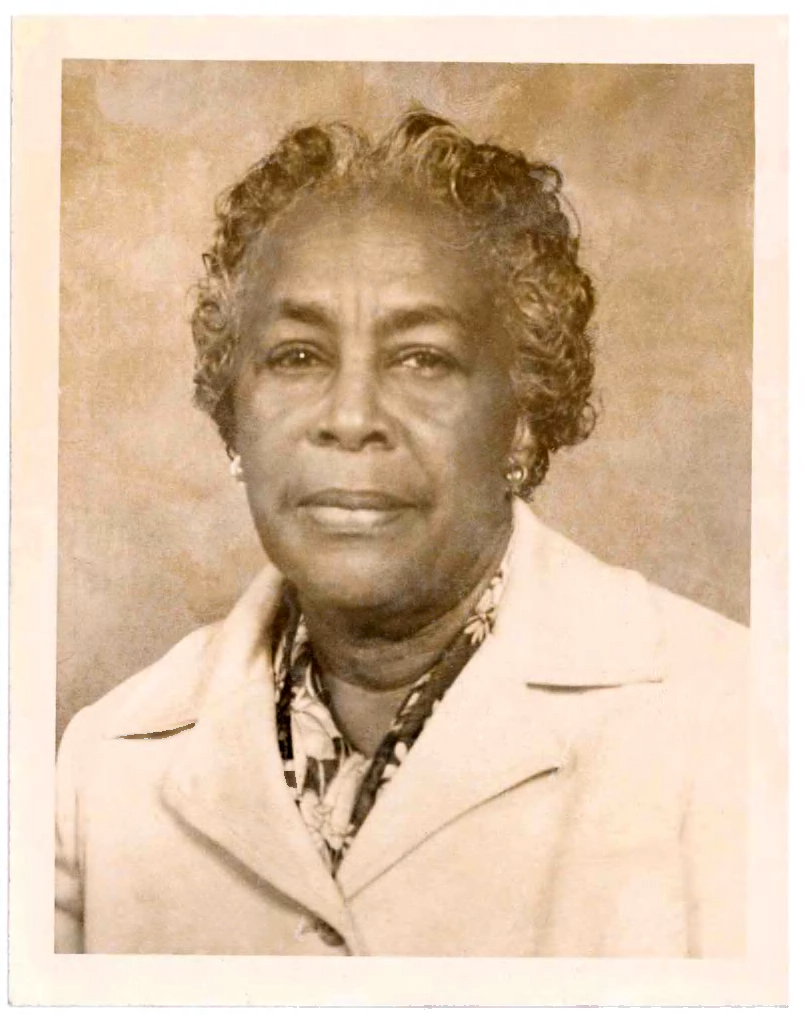
Sanford Museum of History
Bentley and her family represent a cohort of notable Black pioneers who settled in Central Florida around the turn of the 20th century. Their efforts were vital in turning Sanford into an agricultural powerhouse, a hub of Black self-government, and an epicenter for educational opportunities for Black youth. Bentley’s life is representative of the fruits of this labor, and it is through her work that she imprinted on recent generations the importance of remembering the labor of previous generations – as she expressed it, the importance of honoring the “significance of baked cornbread.”
During Reconstruction, the development of railroad systems in Florida and growing investments into local agricultural industries demanded a larger workforce. Often, Black workers were recruited to settle in Central Florida for their agricultural knowledge and to satisfy a growing demand for inexpensive labor. Gen. Henry Sanford was among those who led local investment and labor recruitment. In the 1870s, Sanford brought 60 Black laborers from Madison in north Florida to work at his St. Gertrude Grove. While some laborers were able to form towns near railroad yards, segregation and racial violence limited the number of neighborhoods available for a growing Black community.
After a group of white “shotgun policy” men attacked Black workers at Sanford’s labor camp, Sanford turned to white immigrant laborers – laying the foundation for the Swedish community of Upsala – and established Georgetown, a segregated Black community situated on the flat marshland west of Mellonville.
Bentley’s grandfather Smith Burnett was among the first Black laborers that Henry Sanford recruited from north Florida. In the 1880s, Burnett purchased a plot of land from Sanford through the Florida Land and Colonization Company. Once Burnett was settled in Georgetown with his wife, Susan, and their two children, he worked for the city as a lamplighter while Susan Burnett earned money as a domestic worker.
Poverty and terror
Throughout Reconstruction and into the early 20th century, Black laborers continuously contributed to the prosperity of Sanford. This prosperity, however, was not reflected by the state of the city’s Black neighborhoods. Despite the economic success of many of Central Florida’s agricultural centers, most workers could not live on the wages earned in celery fields and citrus groves alone. Although some could find supplemental income as domestic workers, many Black laborers from Sanford would migrate to farms in the North during the spring or summer seasons for work. Alice Branson Mathis is one example of the many Black farm workers who migrated between Sanford and New York to supplement their humble wages.
In addition to economic challenges, domestic terrorist groups such as the Ku Klux Klan staunchly opposed the upward mobility of African Americans nationwide. Sanford was no exception to this nadir of race relations in American history. Altermese Bentley was born in 1910; in recounting her youth, she noted a “visible presence of the KKK marching through the negro community posting signs warning farm laborers not to ask for more pay.” The general economic status of Black people throughout the region, compounded with racial terrorism and inadequate government funding, led to starkly underfunded public institutions within Black communities.
Devotion to education
However, just as Bentley saw the evolution of cornbread from a symbol of hardship to a beacon of strength and resilience, relationships that had been continuously disrupted throughout enslavement became key pillars of social infrastructure within burgeoning Black communities. According to Bentley, parents and teachers would often rely on crowdfunding efforts to circumvent meager funding for schools serving Black children. Despite the lack of money, Black residents maintained a strong devotion to education, and schools emerged as central institutions around which communities were built.
One example is the historic Hopper Academy. Originally named Colored School No. 11, it was formed in 1910 as Sanford’s first school for Black children and continued to serve students until 1962. In the years following desegregation, Hopper Academy ceased to operate as a school and eventually fell into disrepair. When school officials proposed to burn down the building in the 1990s, Bentley advocated for its preservation, stating, “The school was like the church – it was our hub.”
Advocacy by key community members such as Bentley was key to preserving this historic site. In June 1991, Seminole County commissioners approved an application made by the Community Improvement Association of Sanford for a $100,000 federal grant to renovate the building. Today, it remains on Pine Avenue in Sanford and is listed as Seminole County’s oldest surviving Black school.
Like many others in the Georgetown community, Bentley’s parents valued education. As a child, she went to a private kindergarten, and after the 9th grade, she spent some time at the Florida Normal School, a religious boarding school in St. Augustine, during the months when school wasn’t offered for Black schoolchildren in Seminole County. She received postsecondary education from Shaw, Temple, and Pepperdine universities.
Following her graduation from Shaw University in 1932, Bentley began work as a Jeanes teacher in Live Oak, in north Florida – a position made possible by the Jeanes Foundation (also known as the Negro Rural School Fund), established in 1907 by Quaker philanthropist Anna T. Jeanes to develop educational opportunities for rural African Americans in the South through investment in Black educators.
After her marriage and the birth of her daughter, Bentley continued her career as an educator in Philadelphia. She worked as a teacher and school administrator for over 20 years until her retirement in 1975.
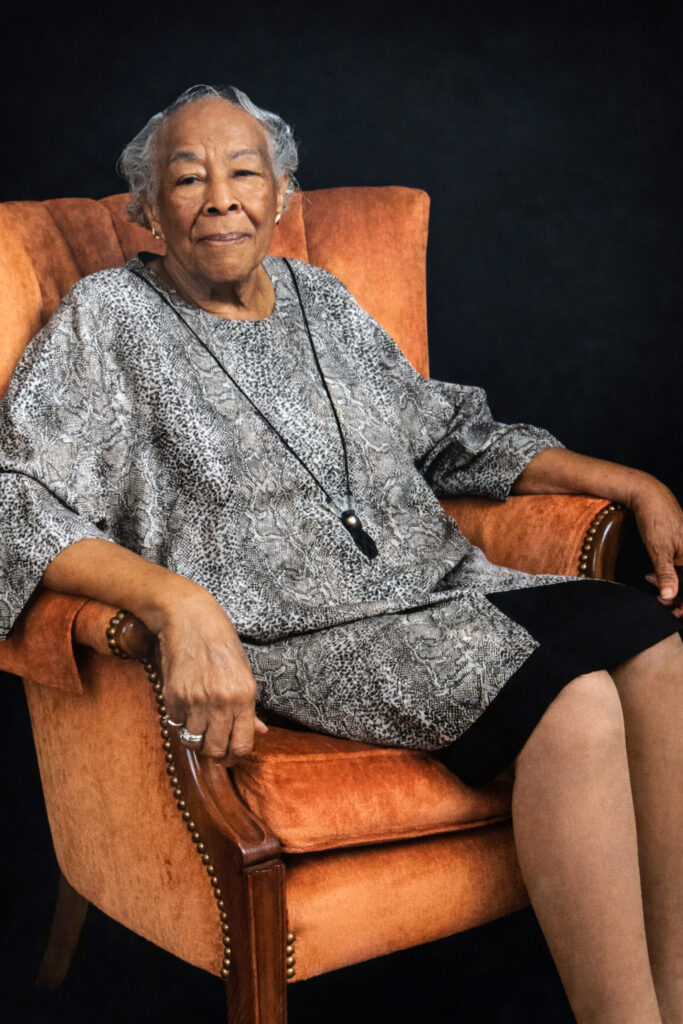 Bentley Elementary School
A historic legacy
Retirement prompted Bentley’s return to Central Florida. She moved back to East Ninth Street in what’s now the Georgetown Historic District of Sanford, on the same lot where her grandfather had built his home in the 1880s. It was during this period that she first took steps toward recording the history of Black communities throughout Seminole County. One of her initial steps was returning to school. She enrolled in Seminole Community College and began the first drafts of her book Georgetown: The History of a Black Neighborhood, as a writing assignment. Her research led her to co-curate three exhibitions with historian Brenda Elliott, who in 1990 had created the first comprehensive survey of Seminole County’s oldest Black communities.
The first of the three exhibitions, on the Black church, was displayed at the Orange County Historical Museum in February 1990; the second, which focused on Georgetown, was exhibited at the Seminole County Public Schools Student Museum; and the third highlighted the labor contributions of Sanford’s Black community. Bentley went on to author four books and tirelessly advocate for the preservation of Seminole County’s Black history and historical landmarks.
Altermese Bentley’s legacy in Sanford is honored not only through awards but also in the very institutions that continue to serve the community. In August 2000, the Seminole County School Board voted unanimously to name a new elementary school in Sanford after her. When asked to choose the school’s colors, Bentley selected forest green, explaining that it symbolized how schools should “nurture and protect youngsters the way a forest does a deer.” Bentley Elementary School opened the following year, on Aug. 6, 2001, with an estimated enrollment of 550 students, a number that has nearly doubled today.
Altermese Bentley’s work stands as a testament to the power of memory, education, and place. Through her writing, teaching, and advocacy, she not only preserved the stories of Sanford’s Black communities but also deepened our understanding of their enduring impact on Central Florida’s history. She died in August 2004 at the age of 93, but her legacy lives on in the institutions she helped protect, the students she inspired, and the generations who now walk the streets of Sanford with a clearer sense of where they come from – and why that history matters.
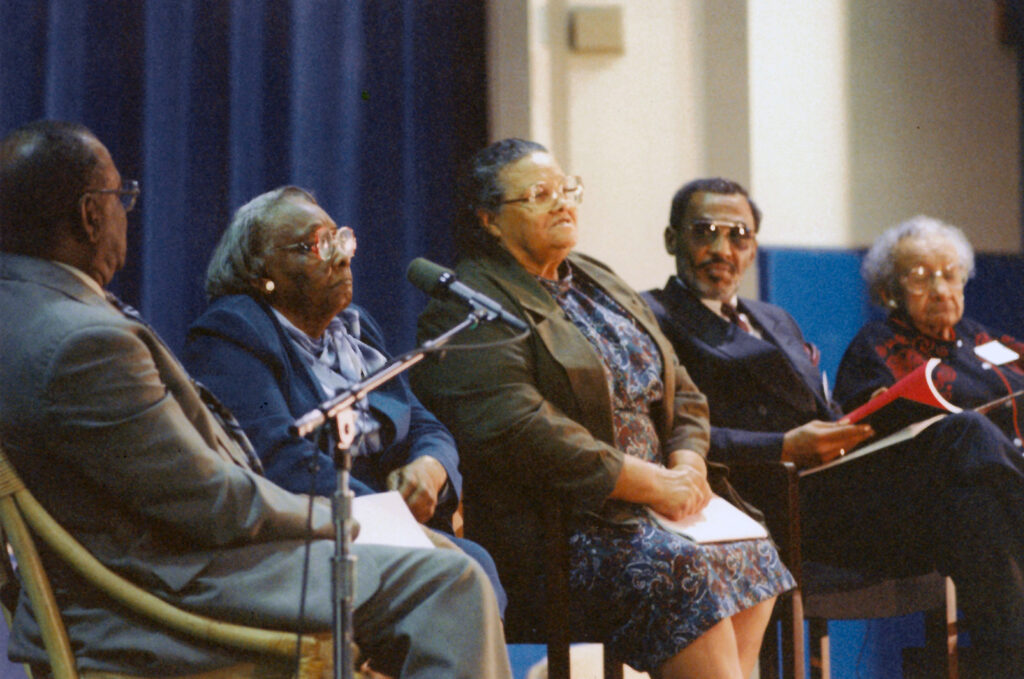
Altermese Bentley, second from left, at the 2001 opening of the school that bears her name, and in other portraits through the years, at top of page.
Museum of Seminole County History